
Many NDIS participants want to increase their independence — to move more easily,complete everyday tasks and feel confident in the community. Yet pain, fatigue, limitedmobility or chronic health conditions can make this feel out of reach. That’s where exercisephysiology plays a critical role.
What is Exercise Physiology?
An Accredited Exercise Physiologist (AEP) is a university-trained allied health professional
who uses movement, exercise prescription, education and behavioral strategies to
improve physical function, mobility, and quality of life for people with disability or chronic
health conditions. In the context of the NDIS, exercise physiology is not just “fitness” — it’s
therapeutic, targeted and result oriented.
The Challenge: Functional Capacity & Everyday Tasks
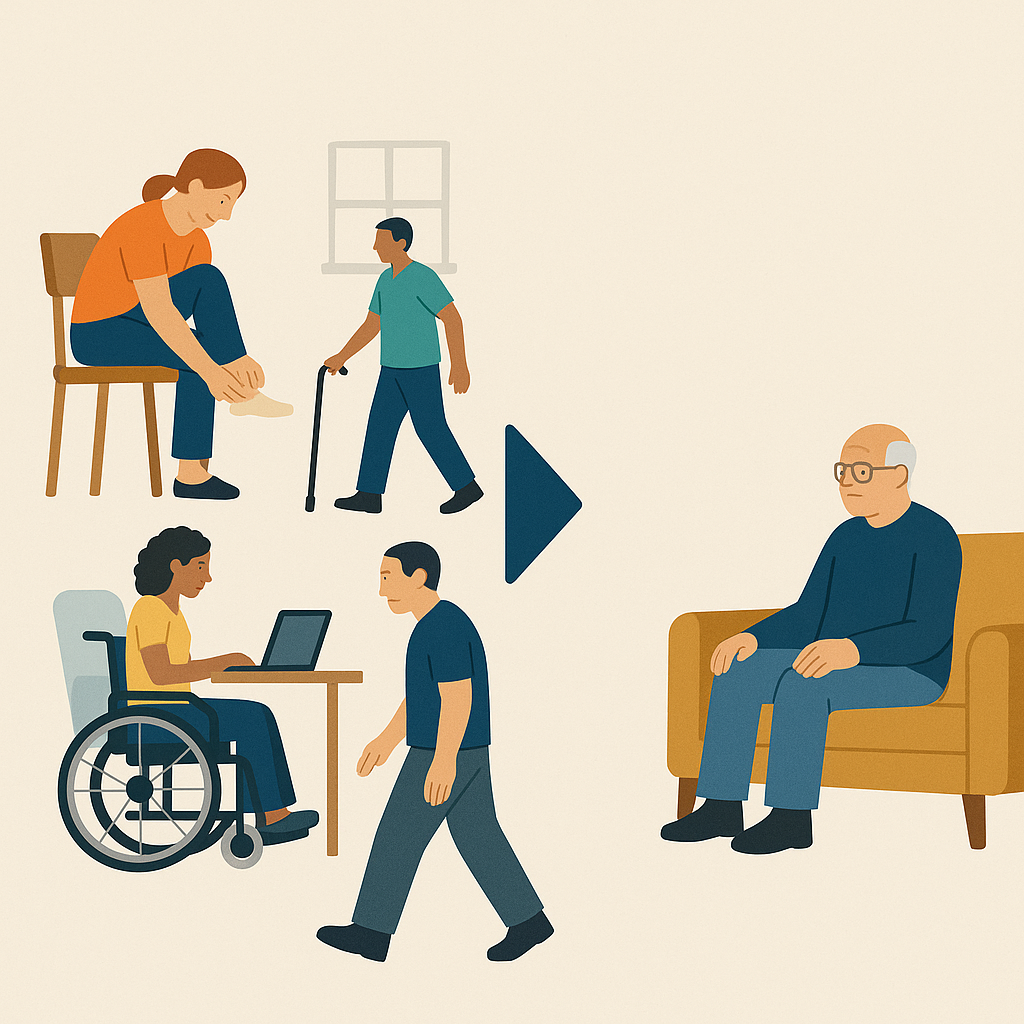
Functional capacity refers to a person’s ability to perform the everyday activities that
matter — getting dressed, moving around the house, participating in community life,
working or studying. For participants under the NDIS, limitations in mobility, strength,
endurance or sensory/motor control can reduce their capacity for daily living and
community engagement.
When movement feels painful, unsafe or impossible, people can withdraw, lose confidence
and miss out on meaningful life activities.
How Exercise Physiology Supports Functional Capacity
Here’s how a tailored exercise physiology program can support functional capacity:
- Thorough assessment & baseline measurement: An AEP will measure strength, balance, mobility, cardiovascular fitness and functional tasks, to identify the specific barriers and capacities.
- Individualized goal setting and exercise prescription: Based on the participant’s goals (e.g., “I want to walk independently to the community center”, “I want to reduce reliance on a carer”), the AEP designs a program that progressively builds capacity.
- Strength, mobility and endurance training: Improved muscular strength, better balance and endurance help break the cycle of “I can’t” by equipping the body to do more.
- Functional-task training: Rather than generic exercises, the program focuses on meaningful movements (e.g., stepping up curb, reaching overhead, transferring safely) which directly support everyday living.
- Pain and fatigue education / pacing: Many participants think “movement = more pain” or “I’ll rest until I feel better”. An AEP helps unravel that myth and teaches pacing, graded exposure and confidence through movement.
- Community, gym or home-based delivery: Especially useful for participants facing transport or mobility barriers, mobile exercise physiology brings the service to the participant’s home, gym or community setting — making it accessible.
- Tracking progress & outcome measurement: Functional gains are monitored over time (e.g., faster transfers, improved walking distance, reduced carer assistance) which aligns with NDIS functional capacity evidence needs.
How It Links to the NDIS
Under the NDIS, supports that build a participant’s functional capacity fit neatly into
“Capacity Building – Improved Health & Wellbeing (12)” and “Capacity Building – Improved
Daily Living (15)”. Many AEP reports form part of evidence for funding, showing how
limitations are being addressed and how outcomes are being achieved.
Additionally, the National Disability Insurance Agency (NDIA) emphasizes that evidence
should show how disability affects daily tasks and how supports reduce that impact.
Take the Next Step
If you’re an NDIS participant (plan-managed or self-managed) and you’d like to explore
how exercise physiology could enhance your independence, mobility and community
participation, we’re here to help. At Greater Health, our mobile Exercise Physiologist’s deliver to your home,
gym or community — all fully tailored to you.
If you’re a carer, family member, or support coordinator, click here for the referral form.
Contact us today: admin@greaterhealth.au | 0479 077 723